
The ERP Transition: Centering Operations for Business Scaling
Spreadsheets are the lifeblood of early-stage startups. However, as transactions, personnel, and billing channels scale, managing disjointed datasets manually leads to operational drag. Here is how to approach the transition to unified ERP architectures.
1. What is an ERP System?
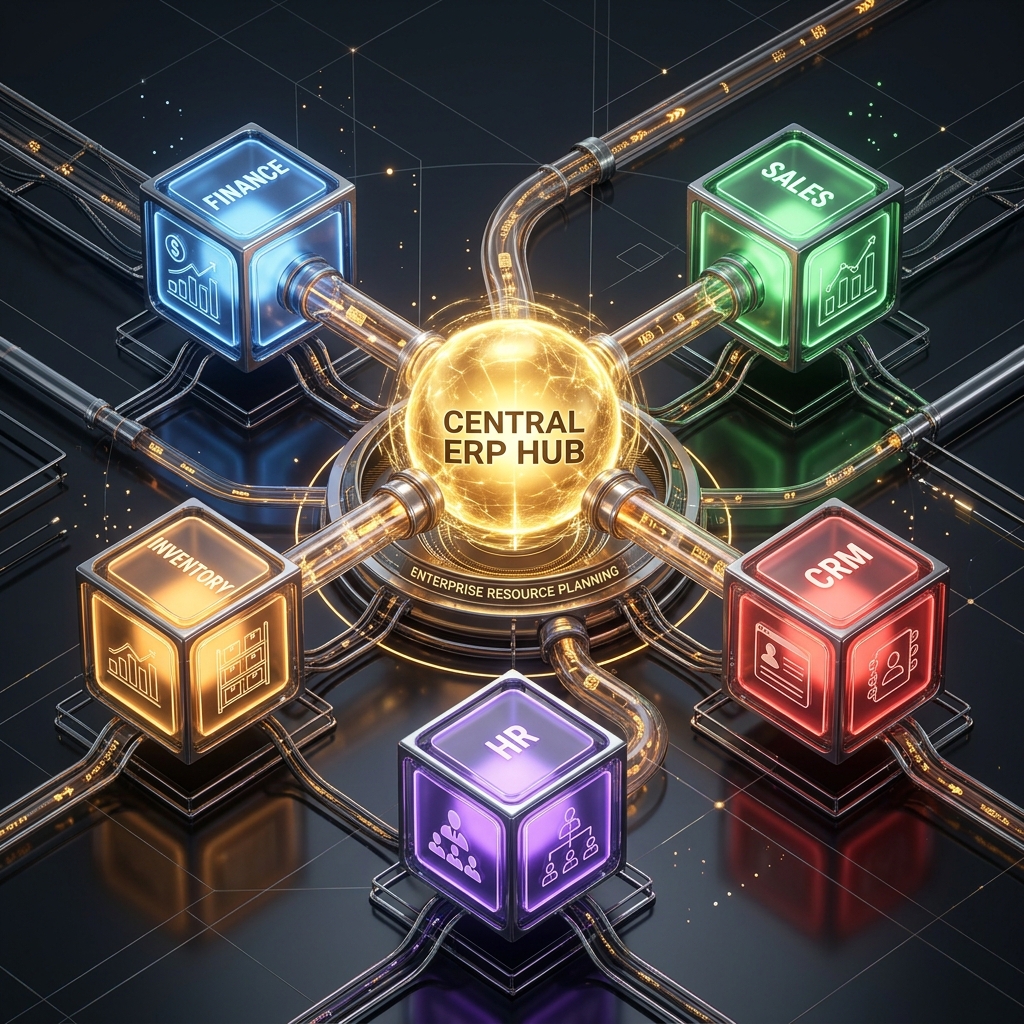
An Enterprise Resource Planning (ERP) platform acts as the central hub of a company's data. It coordinates key processes including:
- Financial Ledger: Syncing revenue statements, general ledgers, accounts payable/receivable, and automated tax calculations.
- Inventory & Supply Chain: Automating warehouses, reorder levels, purchase orders, and vendor shipments.
- Sales & Customer Relations: Processing pipelines, invoicing, contract signups, and client billing histories.
- Human Resources: Managing employee details, payroll modules, expenses, and holiday tracking.
2. When Should You Transition Away from Siloed Tools?
Transitioning to an ERP requires a significant investment in engineering, setup, and training. To determine if your business is ready, evaluate these three metrics:
- Manual Double Entries: Do your operations and finance teams copy information manually between CRM systems and accounting platforms?
- Lack of Real-Time Analytics: Does compiling a monthly gross margin, customer acquisition cost, or stock assessment report require hours of manual sorting?
- Communication Gaps: Are products getting shipped to users before invoicing is completed, or are projects falling behind schedule because client details are isolated in sales silos?
3. Comparing NetSuite, Odoo, and Custom Connectors
When choosing an architecture, businesses generally evaluate three distinct integration paths:
- Oracle NetSuite: The industry standard for mid-market and enterprise scale. Features extensive accounting features, but customization can be rigid and expensive.
- Odoo (Open Source): Highly modular, modern web architecture built on Python. Odoo offers a suite of apps that are easy to customize, run, and host on independent servers.
- Hybrid Custom Connectors: If you are attached to specific niche SaaS apps (like Stripe, HubSpot, or Jira), building custom API middleware to centralize their databases represents a fast, high-ROI alternative to a full ERP implementation.
4. Devora Tech Studio's Integration Process
We guide businesses through ERP migrations in three structured, Agile phases:
- 1. Process Mining & Audit: Mapping every transaction, invoice layout, inventory category, and staff access control parameter.
- 2. Custom Module Customization: Coding Odoo Python add-ons, database connectors, and custom PDF templates in clean, standard-compliant code.
- 3. Migration & Training: Exporting legacy files, cleaning databases, and training team members in staging sandbox environments before going live.
Let's Discuss Your System Setup
Centralizing operational data is critical to eliminate manual errors and enable automated scaling. Schedule a free advisory call with our senior architects to model your integration roadmap.